Men’s course record
2:05:08
Samwel Mailu · 2023
- Average pace
- 2:58 / km
- Terrain-adjusted
- +0.24 %
Europe15
Americas6
Vienna, Austria April, set by the organiser each year Founded 1984
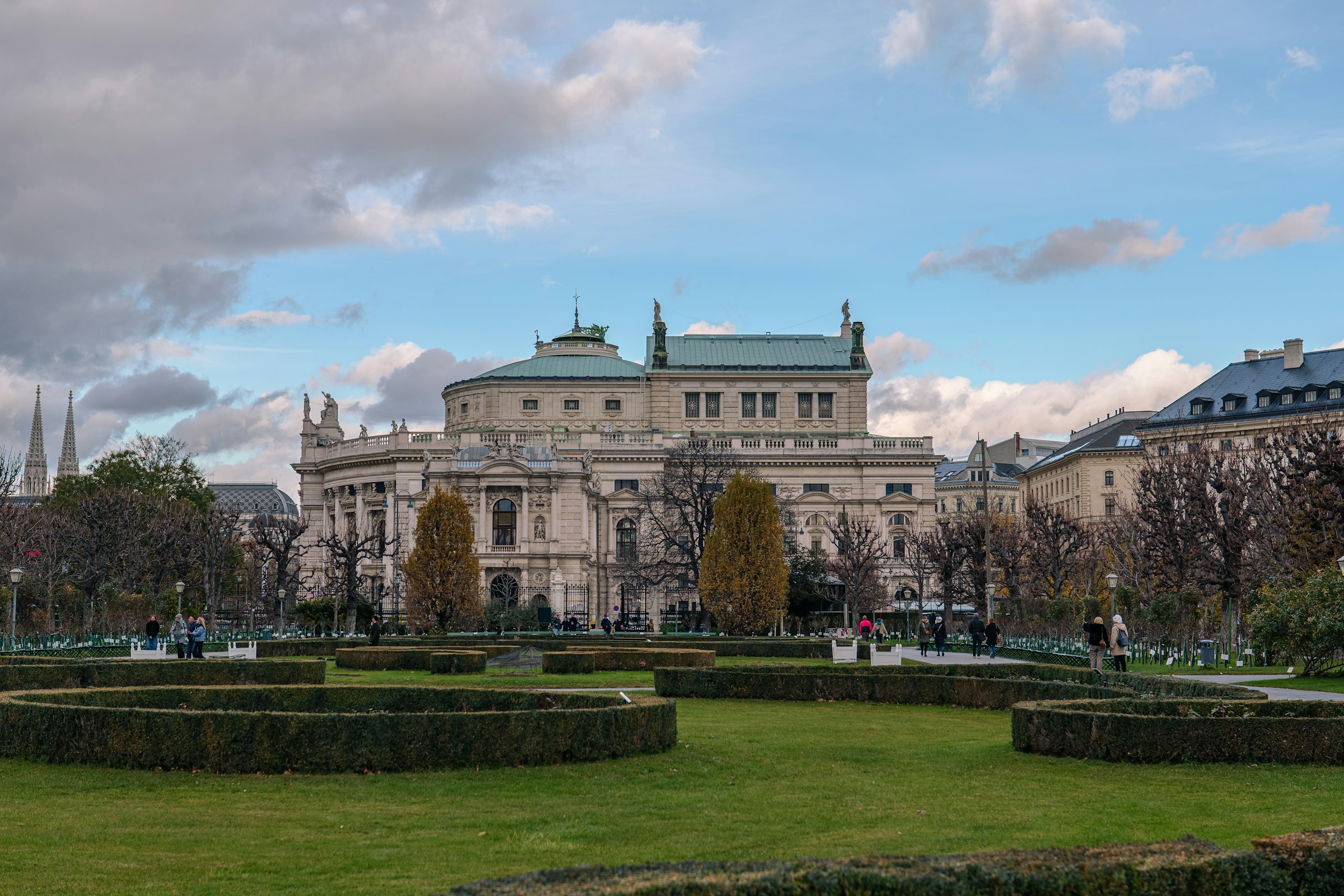
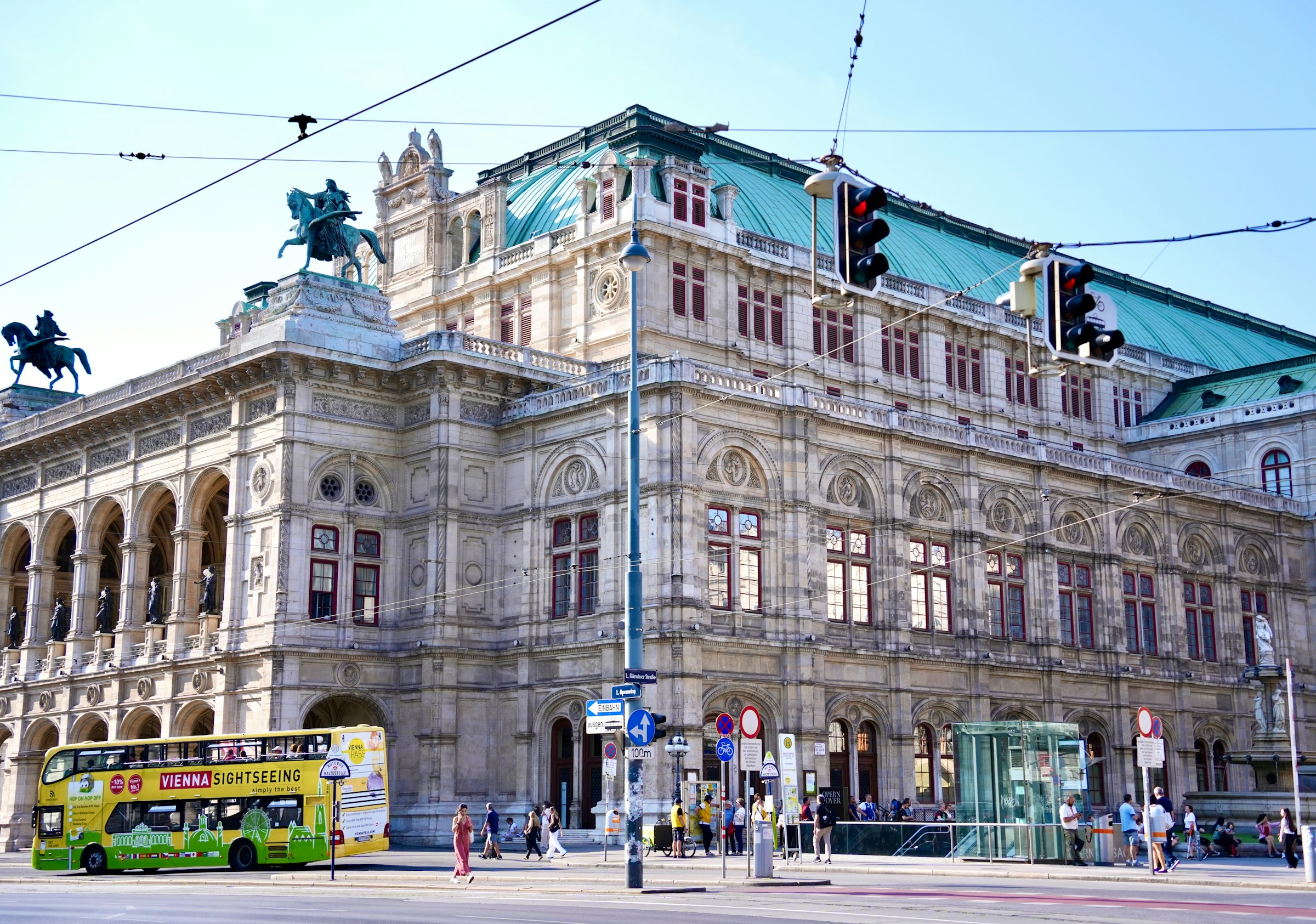
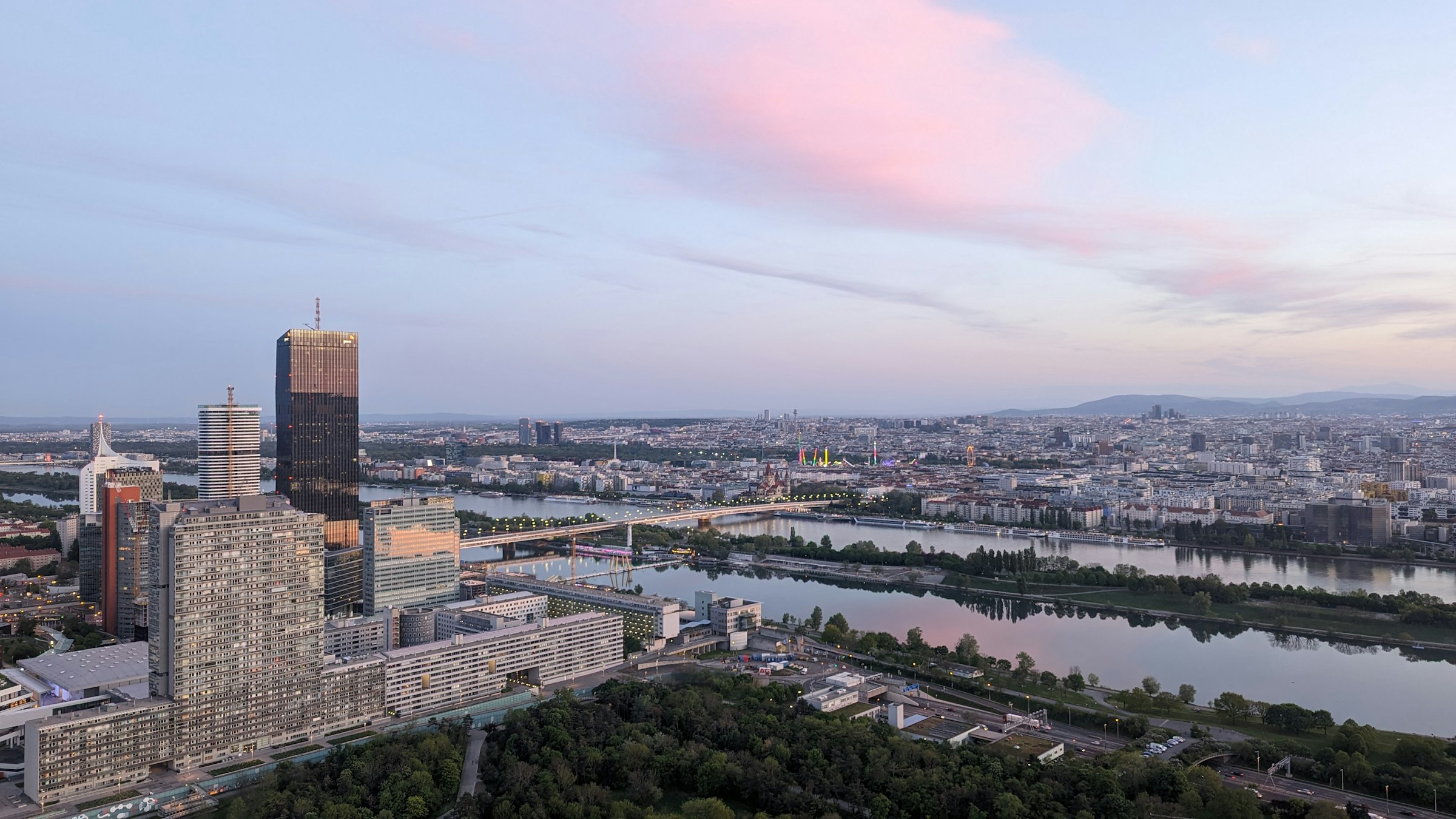
Over the Danube to the Prater, out along the Wienzeile to Schönbrunn, and home on the Ring to the Burgtheater.
Marathon Course · every marathon course, measured the same way
Vienna Marathon
Over the Danube to the Prater, out along the Wienzeile to Schönbrunn, and home on the Ring to the Burgtheater. Reichsbrücke → Burgtheater, Vienna, Austria.
Elevation · a 2025 GPX within 10 m of the organiser's own file, without the two short re-routes made for 2026 · Sonny 1" .hgt tiles — CC BY 4.0 · smoothed 100 m 158–202 m
—
0.08.517.025.534.042.5
kmmi — elev — grade — hover or drag the profile
The Danube is the low side of the city, and the course spends its first 9.0 km down there. Over the Reichsbrücke and round the Prater, it varies by only 10 m.
From the Ring at 9.0 km the course climbs for nine kilometres, along the Wienzeile, round Schönbrunn and up Mariahilfer Straße. The high point is on Mariahilfer Straße by the Westbahnhof, 202 m at 18.1 km, and 40 m above the Ring. The steepest climbing kilometre is on the way, 12 m from 15.4 km on the approach to Schönbrunn. Then Mariahilfer Straße gives it back: 17 m down in the kilometre from 19.3 km.
From 23.0 km to 39.5 km, along the canal and down the Prater Hauptallee and back, the course stays within 8 m. The low point, 158 m, is on the Hauptallee at 34.2 km, coming back past the Lusthaus after the turn. From 39.7 km the road rises 14 m back up to the Ring, and the finish, at 177 m, is 11 m above the start. Add up the energy cost of every gradient and, for a three-hour runner, the course comes out about 24 seconds slower than a flat 42.195 km (0.24 %).
Take it with you
Course GPX Organiser's course map
The GPX is ours: our resampled line, a point every 25 m, carrying Sonny 1" .hgt tiles — CC BY 4.0 elevation rather than the GPS noise a watch file usually holds.
Sonny 1" .hgt tiles — CC BY 4.0, a 2025 GPX within 10 m of the organiser's own file, without the two short re-routes made for 2026, smoothed 100 m · marathoncourse.com/marathons/vienna/ · checked 2026-09-24
1990200020102020
Pace is derived from the certified distance. Terrain-adjusted figures come from the same model that ranks every course on this site.
Men’s course record
2:05:08
Samwel Mailu · 2023
Women’s course record
2:20:06
Tigist Gezahagn · 2026
The morning, hour by hour
The organiser's 2027 marathon page, with bag-drop times from the 2026 timetable. Austria's clocks went forward at the end of March, so there's no change to allow for. The organiser publishes no intermediate cut-offs. The finish closes at 3:30pm, six and a half hours after the first wave, and official sweepers run at the back of the field all the way to the line.
Race-day mean temperature, 1995-2025. Lime marks the hottest edition; the coldest and wettest carry a label only, so the colour still means one thing.
Mostly. The whole course sits within 44 m, and the organiser gives the same range. The one real hill is a long rise in the first half, 40 m from the Ring out to the Westbahnhof at 18.1 km. From 23.0 km to 39.5 km, along the canal and through the Prater, it stays within 8 m.
Sonny's LiDAR DTM of Europe, sampled every 25 m, smoothed over 100 m. Raw-to-smoothed ratio 2.2; the organiser's course page.
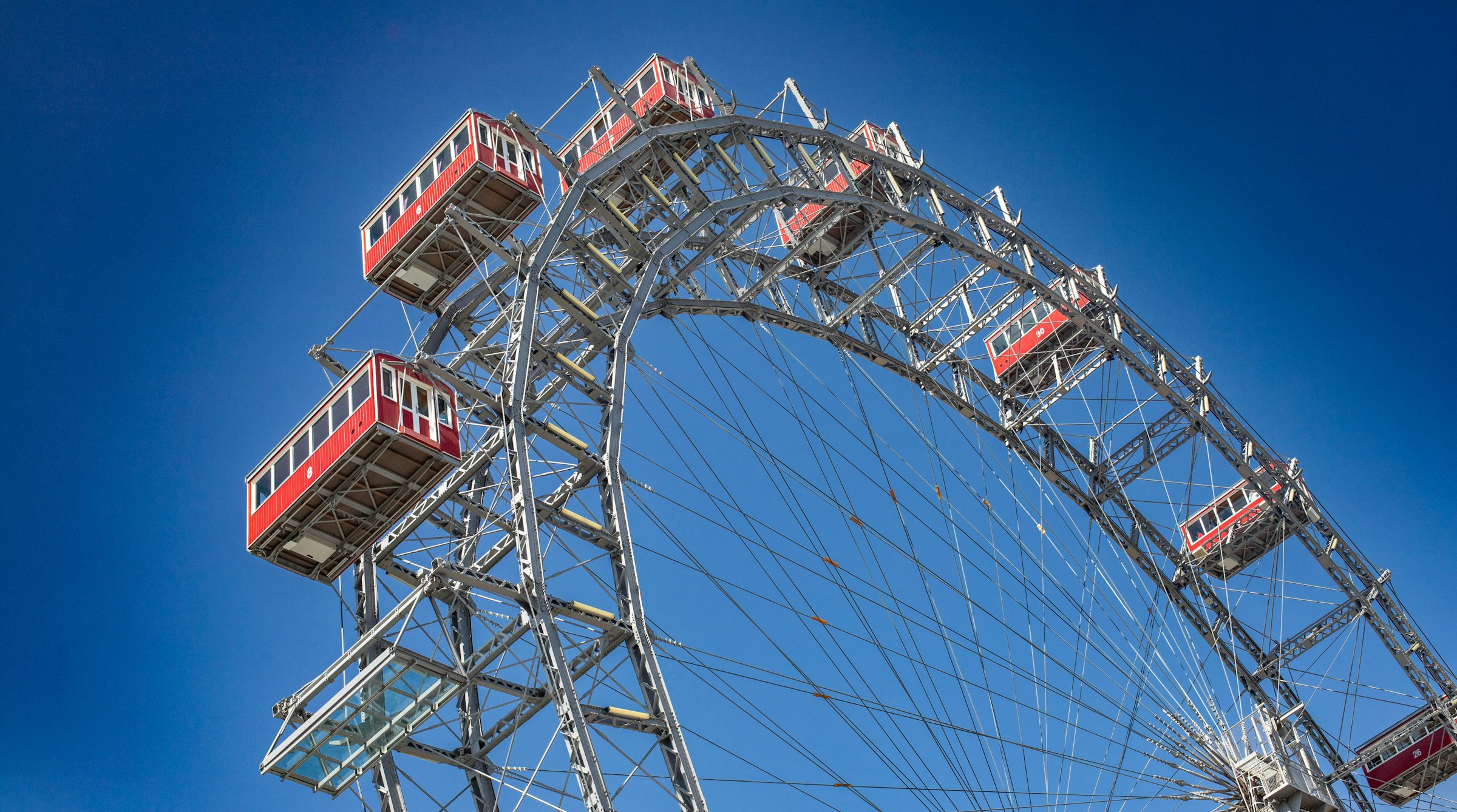
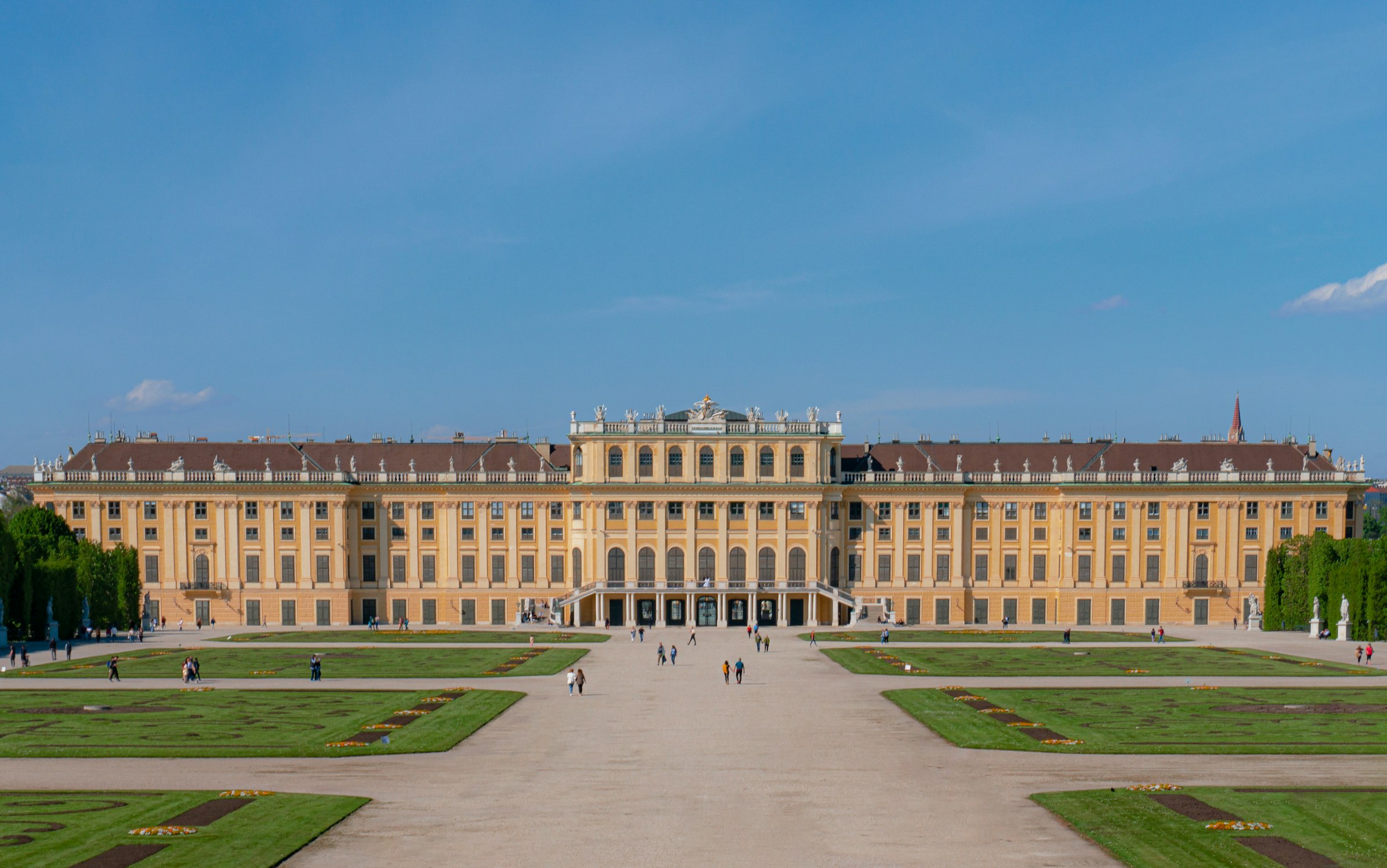
Yes, at about 16.0 km, where it swings round past the front of the palace and turns back towards the centre on Mariahilfer Straße. It also passes the Riesenrad and the Naschmarkt, and the Staatsoper twice. It doesn't pass St Stephen's Cathedral.
This site's course line.
Only from the waitlist. The marathon closed on 20 September 2026, and places handed back until 7 March 2027 go to the next name on the list. Joining is free, and you pay only if you're moved up.
The organiser's 2027 marathon page.
It starts with the marathon and shares the road until about 20.3 km, by the Museumsquartier. There the half turns right under a red arch towards its finish, and the marathon carries straight on under a blue one.
The organiser's 2026 course page.
Fast enough for a 2:05. Samwel Mailu ran 2:05:08 in 2023 and Tigist Gezahagn 2:20:06 in 2026. The long climb is over by 18.1 km, and the rest is flat until the last 2.8 km.
Race reports for 2023 and 2026; this site's course line.
No. You need to be 18 or over. A time of 3:35 or faster, proved by 12 March, gets you into a front start block; without proof you start further back.
The organiser's 2027 marathon page.
Yes. Its start and finish are 4.7 km apart, and the finish is 11 m higher, both well inside the World Athletics limits.
Separation and rise from the Reichsbrücke start to the Burgtheater, on this site's course line; the limits are World Athletics Competition Rule 31.21.
12,995 entered the 2026 marathon and 8,657 finished, on a warm day. The half marathon is bigger, and the whole weekend drew a record 49,379 entries across nine events.
Organiser figures for the 2026 edition.
About 13.6 °C during a typical race: that's the median across 29 years, which have run from 3.6 °C to 19.9 °C. 3 of the 29 were wet.
ERA5 reanalysis for the race date, 1995-2025.
Easily. The finish is 11 m above the start, so the B.A.A.'s downhill adjustment, which begins at 1,500 ft of net loss, has nothing to act on. The long climb is over by 18.1 km, and the Prater is flat when you're tired. From 39.7 km the road rises gently back up to the Ring.
Net drop +11 m from this site's course line; 2027 adjustment None. Certification elite label: World Athletics Elite Label, as stated on the organiser's 2027 marathon page; record-eligible.
It comes from Sonny 1" .hgt tiles — CC BY 4.0, sampled every 25 m along the course line and smoothed over 100 m. The raw-to-smoothed ratio here is 2.2. Around 1.3 means the model is reading the ground, not rooftops; above about 2.0 the total climb carries real noise, and the net change is the sturdier number.
0 missing samples · 5 bridge spans corrected.
| Fact | Source | Verified |
|---|---|---|
| Course line | Third-party GPX for the 2025 edition, which follows the organiser's own 2025 file to within 10 m. It measures 42.689 km, 1.17 % long, from 1,378 points; our resampled line measures 42.527 km. For 2026 the organiser moved two short stretches: between km 22 and 24 the course now takes Maria-Theresien-Straße to Roßauer Lände instead of Währinger Straße, and between km 36 and 38 it runs on Schüttelstraße. Neither moves the start, the finish or the high and low points, and no change has been announced for 2027. Archived with its hash in data/raw/sources. | 2026-09-24 |
| Elevation | Sonny's LiDAR DTM of Europe (CC BY 4.0), sampled every 25 m, smoothed over 100 m. Raw-to-smoothed gain ratio 2.2, above the 2.0 at which the total climb carries real noise, so the net change and the high and low points are the sturdier figures. Five bridges were straightened between their ends, including the kilometre-long Reichsbrücke at the start, whose deck arches above a straight line. | 2026-09-24 |
| Elevation, independent check | The organiser gives 44 m between the lowest and highest points of the course. We measure 157.8 m to 202.2 m, a range of 44.4 m. | 2026-09-24 |
| Race-day weather | ERA5 reanalysis via the Open-Meteo archive, 1995–2025 at the start, 09:00–15:00 local, sampled on the third Sunday in April. That reproduces the 2026 and 2027 dates, but the race moves in some years: it was held on 23 April in 2023 and 6 April in 2025. 2020 and 2021, when there was no April race, are excluded. | 2026-09-24 |
| Course records | Samwel Mailu 2:05:08 (2023) and Tigist Gezahagn 2:20:06 (2026), from ORF's report of the 2026 race, which broke the women's record and not the men's. | 2026-09-24 |
| Entry and field | The organiser's 2027 marathon page: €155 for everyone, registration closed 20 September 2026, a free waitlist until 7 March 2027. In 2026, 12,995 entered the marathon and 8,657 finished, from ORF's race report. | 2026-09-24 |
| Race day | The organiser's 2027 marathon page: waves from 9:00am, finish closing 3:30pm, eight refreshment points about every 5 km and fifteen water points. Bag-drop times are from the 2026 timetable. | 2026-09-24 |
| Record eligibility | World Athletics Competition Rules, Book C, Part III — Competition Rule 31.21: a record course may lose no more than 1 m per kilometre, and its start and finish may be no more than 21.098 km apart. Vienna finishes 10.9 m above its start, and its start and finish are 4.7 km apart. Inside both. | 2026-09-24 |
Until the Vienna Marathon · 18 Apr 2027
— days
— hrs— min— sec
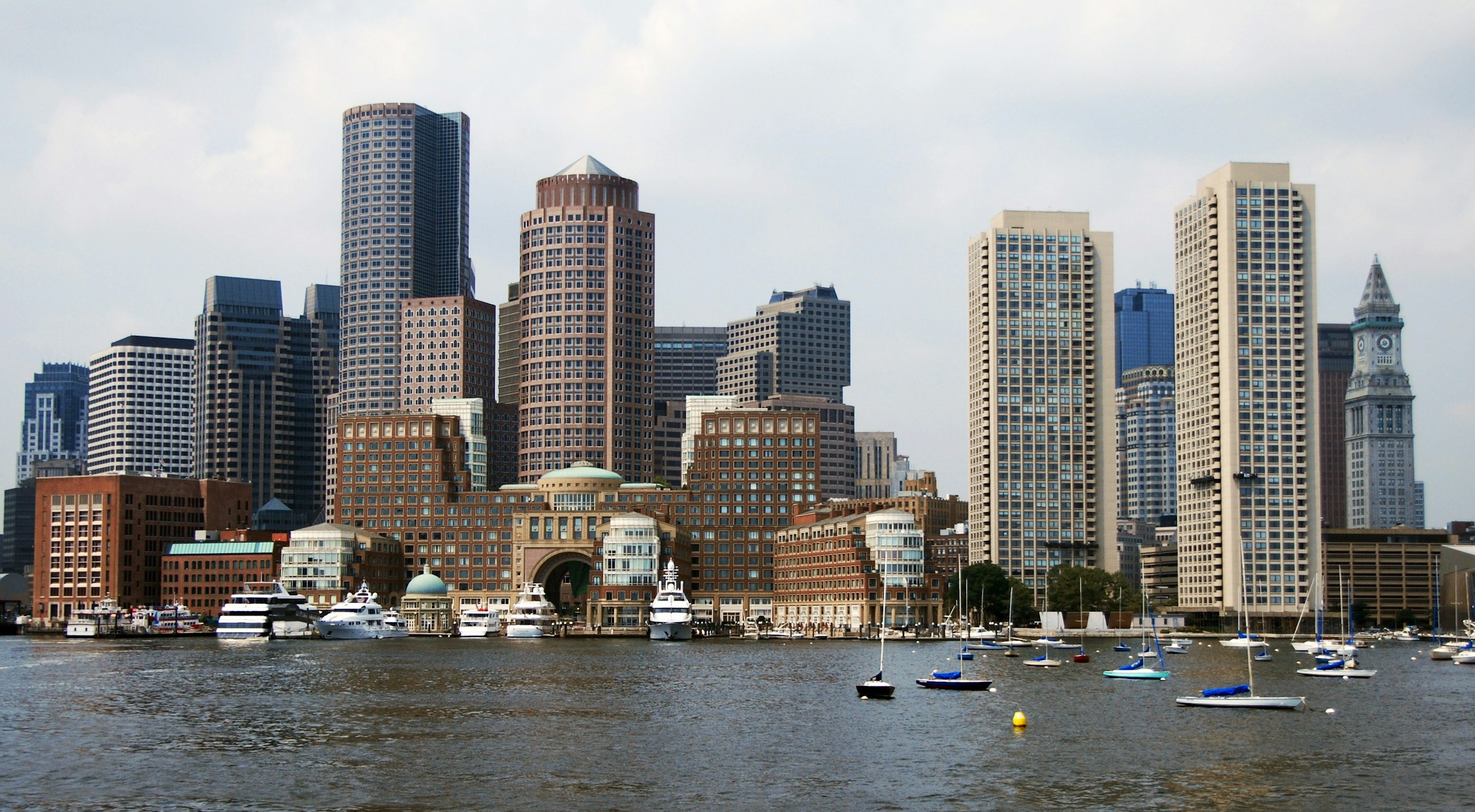
Boston, USA · 19 Apr 2027
Qualified for by nearly everyone on its Hopkinton start line.
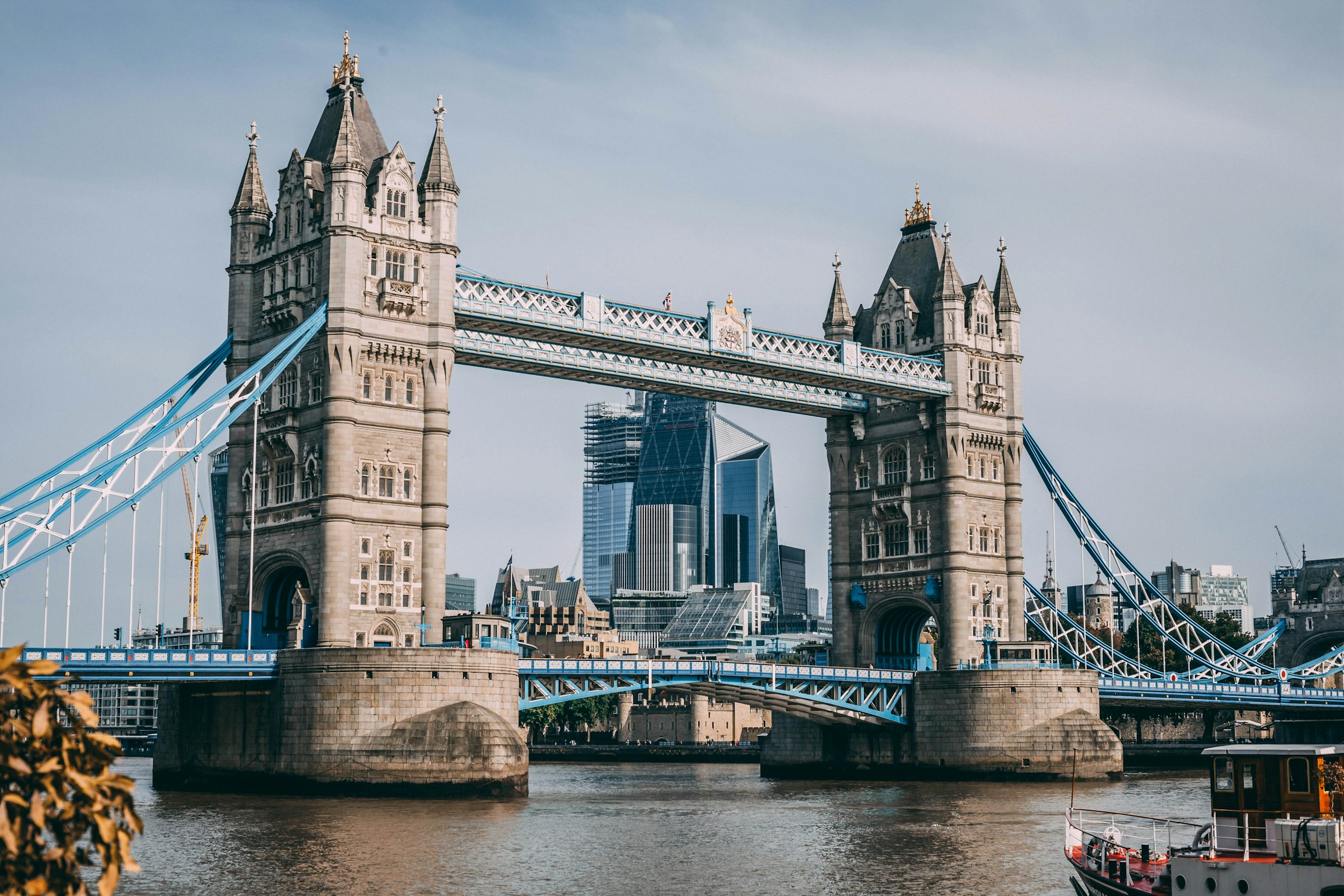
London, United Kingdom · 24 Apr 2027
The fastest marathon ever run, on a course over Tower Bridge just before halfway.
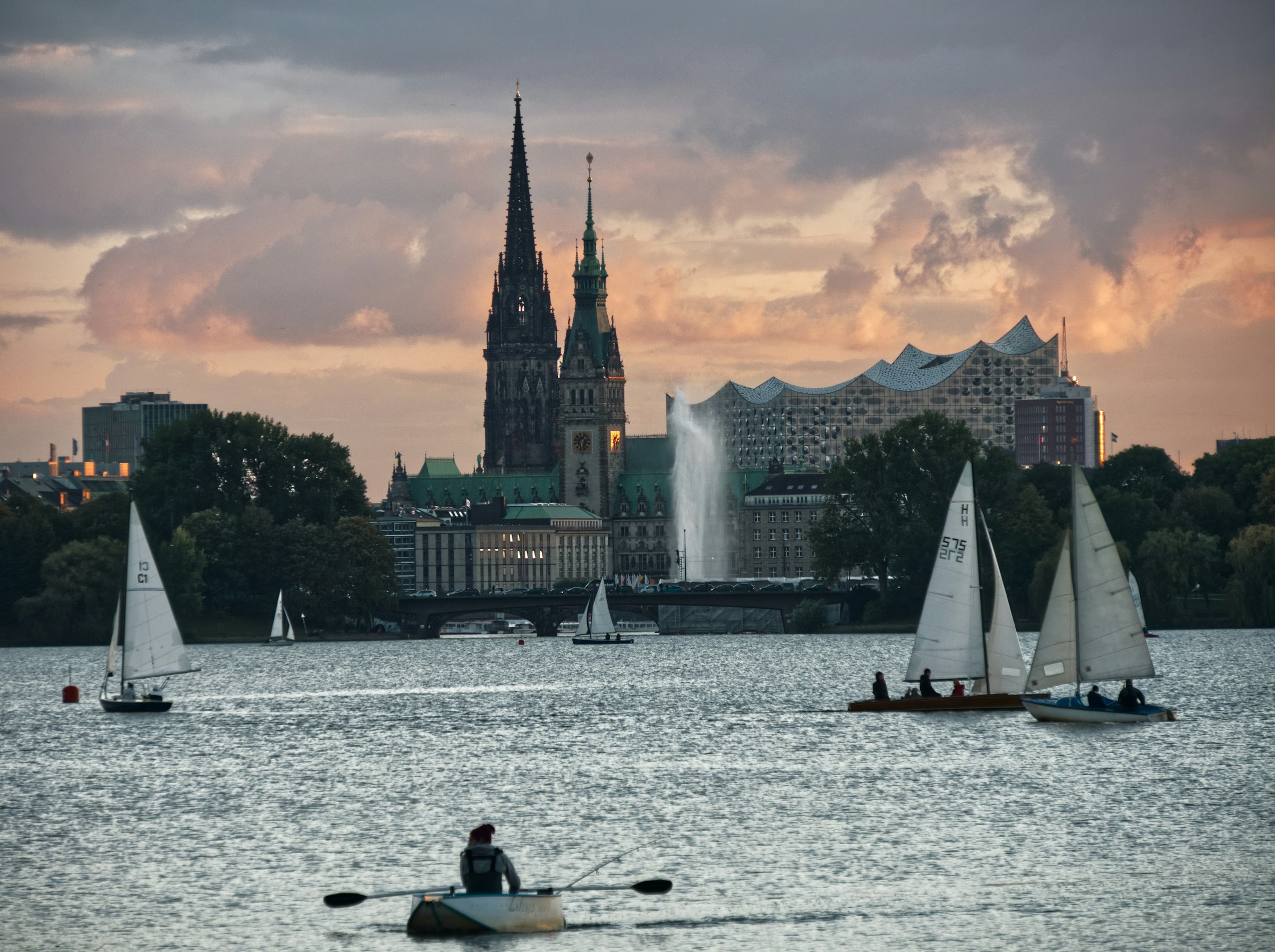
Hamburg, Germany · 25 Apr 2027
Down the Reeperbahn to the harbour, then round the Alster and north to Ohlsdorf before the long run home to the Messe.