Men’s course record
2:07:59
Titus Ekiru · 2019
- Average pace
- 3:02 / km
- Terrain-adjusted
- +0.34 %
Europe15
Americas6
Honolulu, USA The second Sunday in December Founded 1973
A 5:00am start under fireworks, twice round Diamond Head, and a finish that stays open until the last runner is in.
Marathon Course · every marathon course, measured the same way
Honolulu Marathon
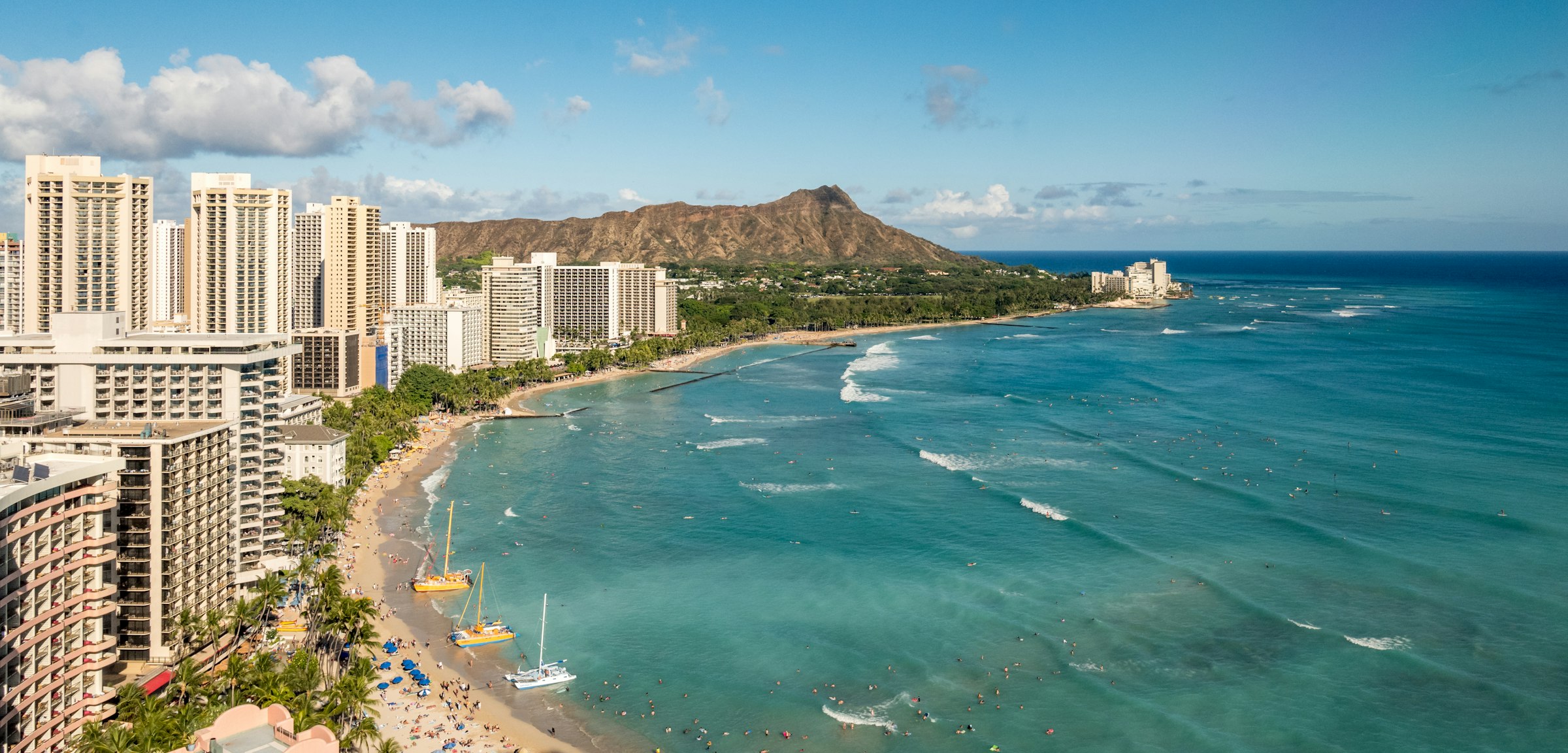
A 5:00am start under fireworks, twice round Diamond Head, and a finish that stays open until the last runner is in. Ala Moana Boulevard → Kapiolani Park, Honolulu, Hawaii, USA.
Elevation · measured on a course line for the 2026 edition · USGS NED 10 m · smoothed 100 m 1–38 m
—
0.08.516.925.433.942.4
kmmi — elev — grade — hover or drag the profile
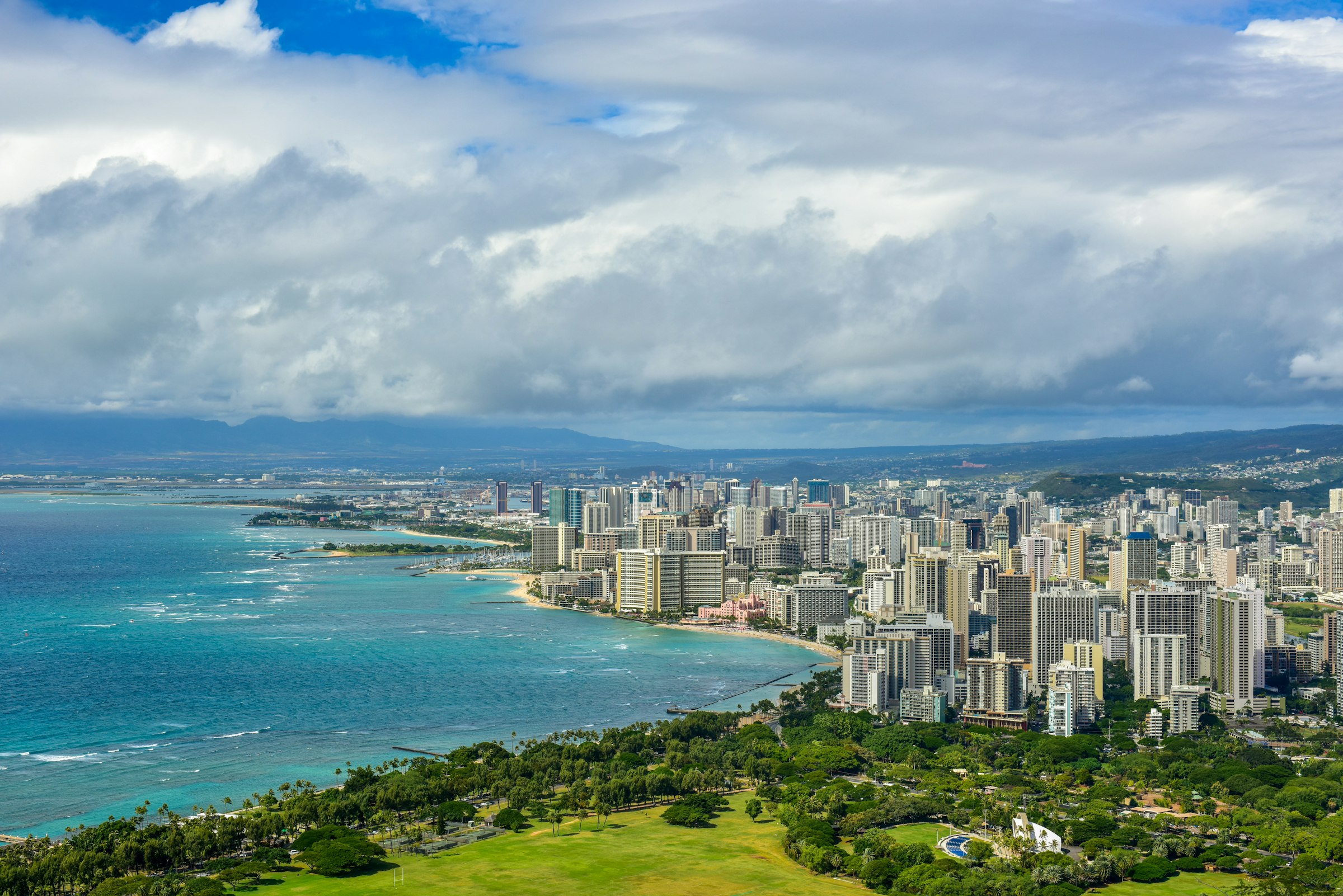
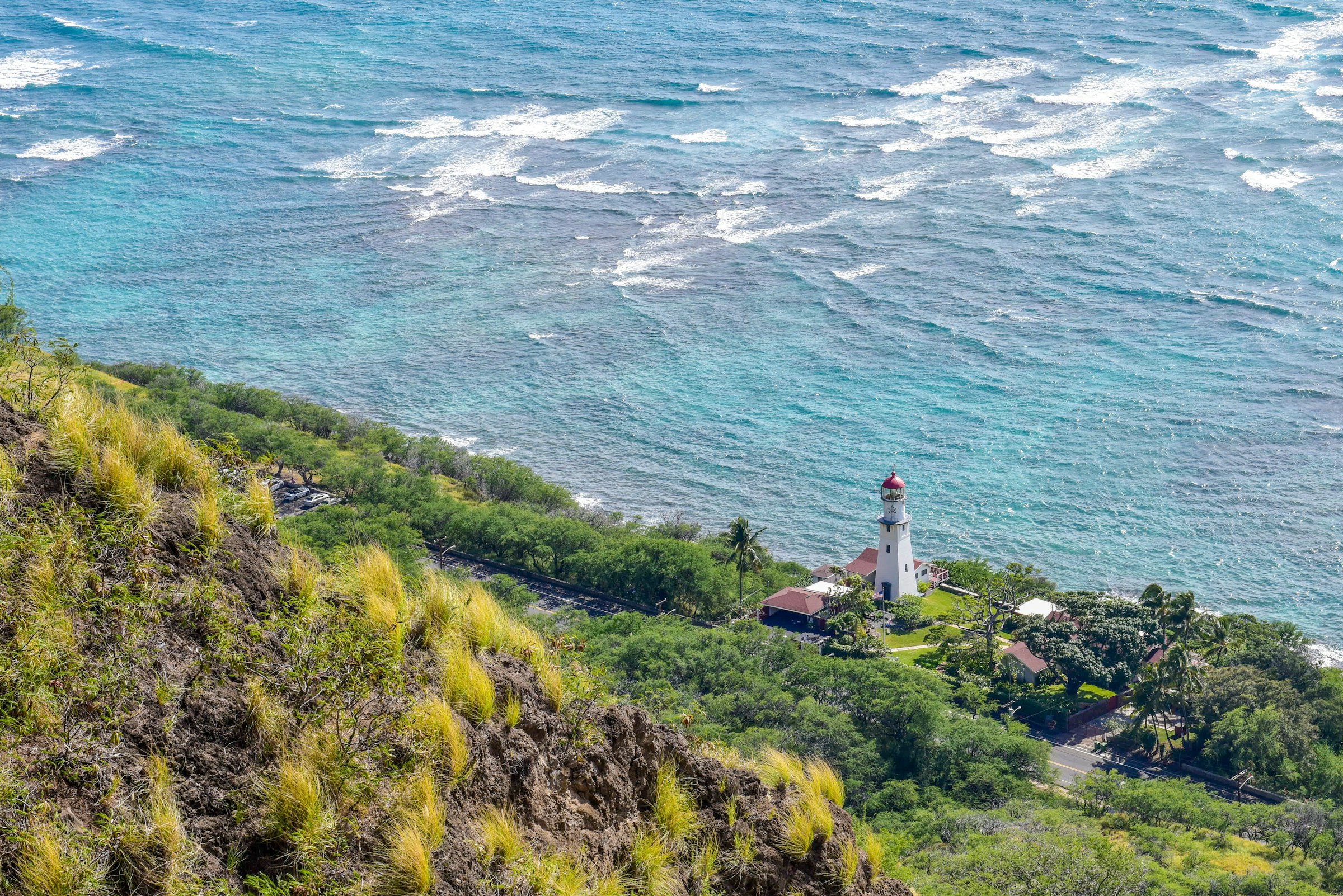
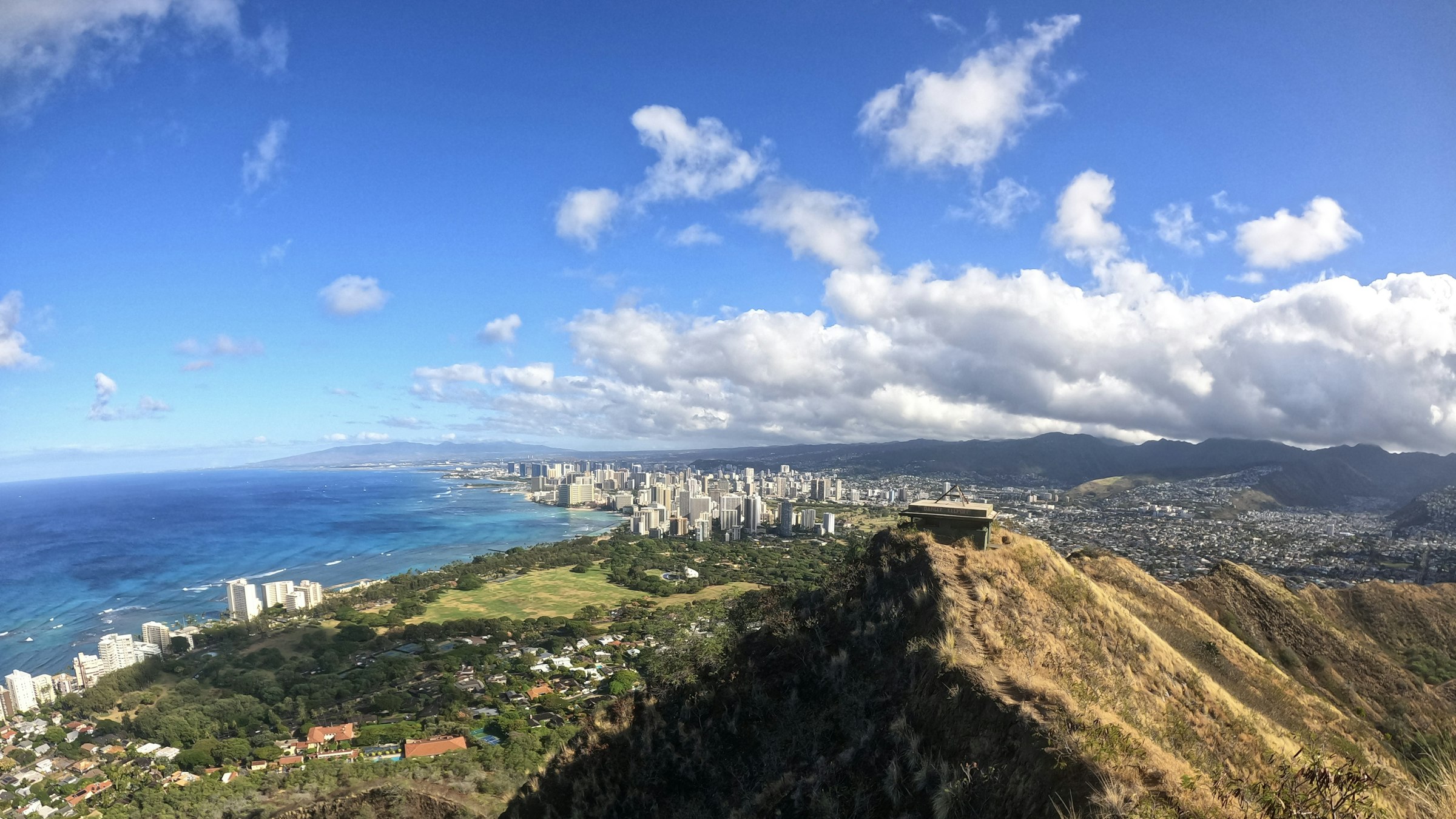
For the first 11.0 km the course is at sea level. Then it climbs Diamond Head Road past the lighthouse, and the steepest climbing kilometre of the race, from 11.7 km, gains 28 m. The road rolls round the crater to the high point, 38 m at 14.9 km, before dropping into Kahala.
The long middle is flat. From 19.0 km to 34.5 km, out along Kalanianaole Highway to Hawaii Kai and back, the course never rises above 4 m.
Then the hill comes round again. The return climb starts at 38.2 km and gains 29 m by 39.5 km. The steepest kilometre of the race comes straight after it: the drop off the crater into Kapiolani Park, 28 m down from 40.2 km. The finish is at 1 m, the height of the start. Add up the energy cost of every gradient and, for a three-hour runner, the course comes out about 36 seconds slower than a flat 42.195 km (0.34 %).
Take it with you
Course GPX Organiser's course map
The GPX is ours: our resampled line, a point every 25 m, carrying USGS NED 10 m elevation rather than the GPS noise a watch file usually holds.
USGS NED 10 m, measured on a course line for the 2026 edition, smoothed 100 m · marathoncourse.com/marathons/honolulu/ · checked 2026-09-24

19801990200020102020
Pace is derived from the certified distance. Terrain-adjusted figures come from the same model that ranks every course on this site.
Men’s course record
2:07:59
Titus Ekiru · 2019
Women’s course record
2:22:15
Brigid Kosgei · 2017

The morning, hour by hour
The organiser's 2026 race information. Hawaii keeps standard time all year, so there's no clock change to allow for. There's no time limit and no cut-off. Roads reopen behind the field, but the finish stays open until the last runner crosses it.
Race-day mean temperature, 1995-2025. Lime marks the hottest edition; the coldest and wettest carry a label only, so the colour still means one thing.
Yes. The finish in Kapiolani Park stays open until the last runner crosses it, and there are no cut-offs on the way.
The organiser's FAQs.
It has one hill, run twice. The course climbs round Diamond Head at 12.0 km and again at 38.0 km, each time by about 28 m, and tops out at 38 m. The long middle, out to Hawaii Kai and back, is flat. It climbs 156 m in all.
USGS 3DEP 10 m, sampled every 25 m, smoothed over 100 m. Raw-to-smoothed ratio 1.7.
It gets most of the field round Diamond Head before the heat builds. Sunrise in mid-December is at about 7:00, and race mornings here have averaged between 21 °C and 25 °C for thirty years.
The organiser's race information; ERA5 reanalysis for the race date.
No. Entry is open to anyone aged seven or over, with no ballot and no limit on numbers. Entries close on 3 December.
The organiser's FAQs and entry page.
At Kapiolani Park, by the finish, the day before the race. There's no bag drop at the start, so wear what you're willing to leave behind.
The organiser's FAQs.
Japan Air Lines has sponsored the race since 1985, and package tours from Japan have filled a large part of the field ever since. In 2025, 27.9 % of the weekend's entries came from Japan.
The organiser's entry statistics.
On the rules, yes. The course starts and finishes at the same height, 3.8 km apart, which passes both World Athletics tests. On the weather, it's unlikely: the course record is 2:07:59.
Honolulu's start and finish heights and separation from the course line, against World Athletics Competition Rule 31.21.
In 2025, 29,137 entered the marathon. Across the weekend's three races there were 42,962 entries, 27.9 % of them from Japan.
Organiser figures for the 2025 edition.
About 23.6 °C during a typical race: that's the median across 30 years, which have run from 21.1 °C to 25.4 °C. 4 of the 30 were wet.
ERA5 reanalysis for the race date, 1995-2025.
Yes. The organiser says the course is USATF-certified, and it finishes at the height it starts, so the B.A.A.'s downhill adjustment has nothing to act on. The weather is the catch. Every race morning of the last thirty has averaged 21 °C or more, and the second climb of Diamond Head comes at 38 km.
Net drop +0 m from this site's course line; 2027 adjustment None. Certification usatf certified: USATF-certified, according to the organiser; its World Athletics label for 2026 is not confirmed here.
It comes from USGS NED 10 m, sampled every 25 m along the course line and smoothed over 100 m. The raw-to-smoothed ratio here is 1.7. Around 1.3 means the model is reading the ground, not rooftops; above about 2.0 the total climb carries real noise, and the net change is the sturdier number.
0 missing samples · 0 bridge spans corrected.
| Fact | Source | Verified |
|---|---|---|
| Course line | Third-party GPX for the 2026 edition, matching the organiser's 2026 course description. The file measures 42.447 km, 0.6 % long, from 940 points; our resampled line measures 42.352 km. Archived with its hash in data/raw/sources. | 2026-09-24 |
| Elevation | USGS 3DEP (NED) 10 m, sampled every 25 m, smoothed over 100 m. Raw-to-smoothed gain ratio 1.7. Diamond Head Road is cut into the side of the crater, so the model can blend the road with the slope beside it. | 2026-09-24 |
| Elevation, independent check | The organiser gives the highest point as 124 ft, about 37.8 m, near mile 9. We measure 38.0 m at 14.9 km, which is mile 9.3. | 2026-09-24 |
| Race-day weather | ERA5 reanalysis via the Open-Meteo archive, 1995–2025 at the start, 05:00–12:00 local, sampled on the second Sunday in December. That rule reproduces the 2023, 2024 and 2025 dates. 2020, when there was no race on the road, is excluded. | 2026-09-24 |
| Course records | Titus Ekiru 2:07:59 (2019) and Brigid Kosgei 2:22:15 (2017), from the organiser's records page, checked against the 2024 and 2025 results, which broke neither. | 2026-09-24 |
| Entry and field | The organiser's 2026 fees and FAQ: open entry, no limit on numbers. The organiser's entry table gives 29,137 marathon entrants in 2025, and 42,962 entries across the weekend's three races, 27.9 % from Japan. | 2026-09-24 |
| Race day | The organiser's FAQs for 2026: 5:00am start at Ala Moana Boulevard and Piikoi Street, sixteen aid stations, no cut-off, bags left at Kapiolani Park the day before, shuttles from Honolulu Zoo 2:00–4:00am. | 2026-09-24 |
| Record eligibility | World Athletics Competition Rules, Book C, Part III — Competition Rule 31.21: a record course may lose no more than 1 m per kilometre, and its start and finish may be no more than 21.098 km apart. Honolulu starts and finishes at the same height, 3.8 km apart. Inside both. | 2026-09-24 |
Until the Honolulu Marathon · 13 Dec 2026
— days
— hrs— min— sec
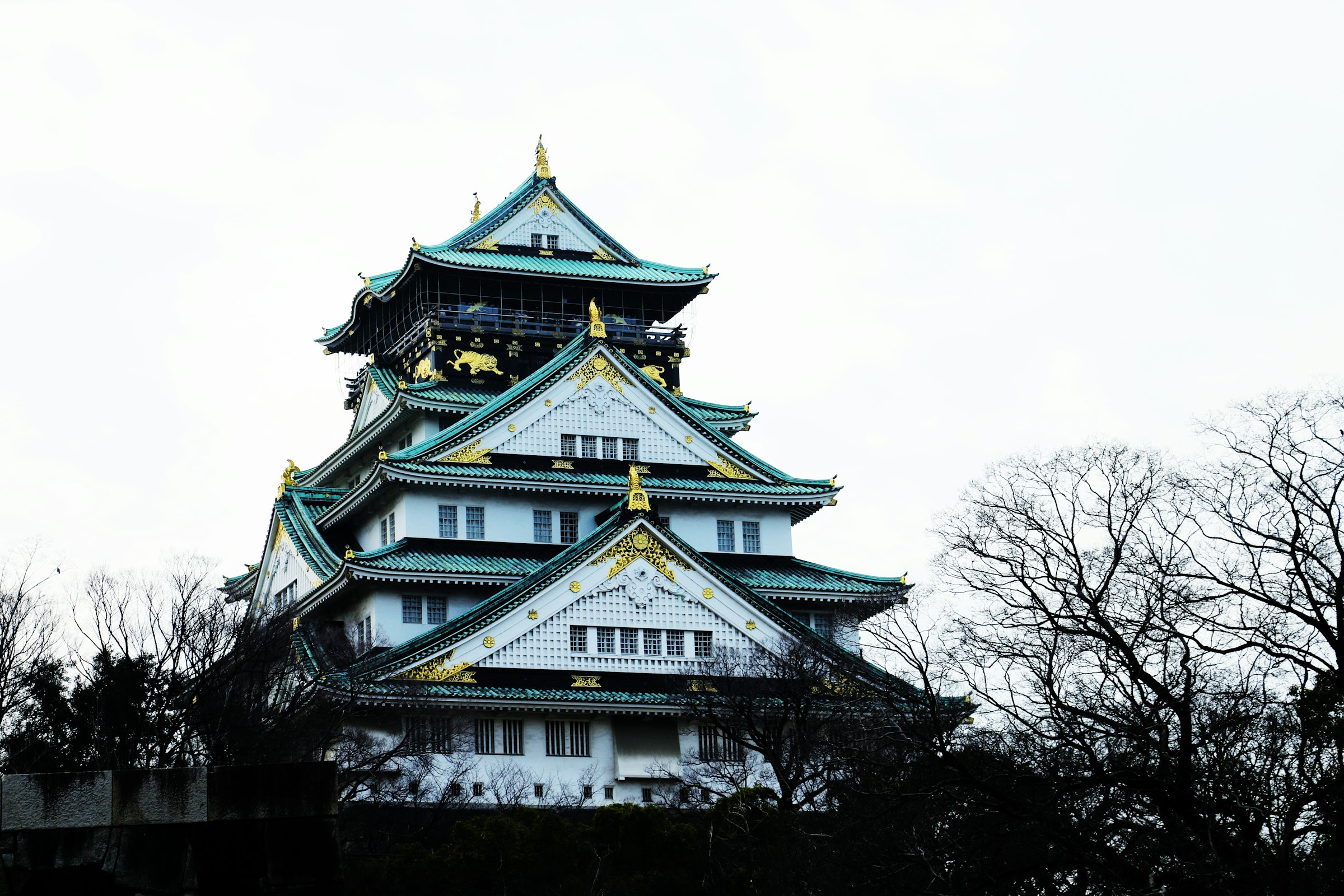
Osaka, Japan · 28 Feb 2027
Down Midosuji to the docks and back, with one short climb onto the plateau before the castle.

Tokyo, Japan · 7 Mar 2027
Down off the Shinjuku plateau, out to Asakusa and back through Ginza to a finish by the Imperial Palace.

Barcelona, Spain · 14 Mar 2027
Through the Eixample past three Gaudí buildings, down to the harbour and along the sea, and back up to the Arc de Triomf.