Men’s course record
2:04:13
Tesfaye Deriba · 2025
- Average pace
- 2:57 / km
- Terrain-adjusted
- −0.07 %
Europe15
Americas6
Barcelona, Spain Mid-March, set by the organiser each year Founded 1978
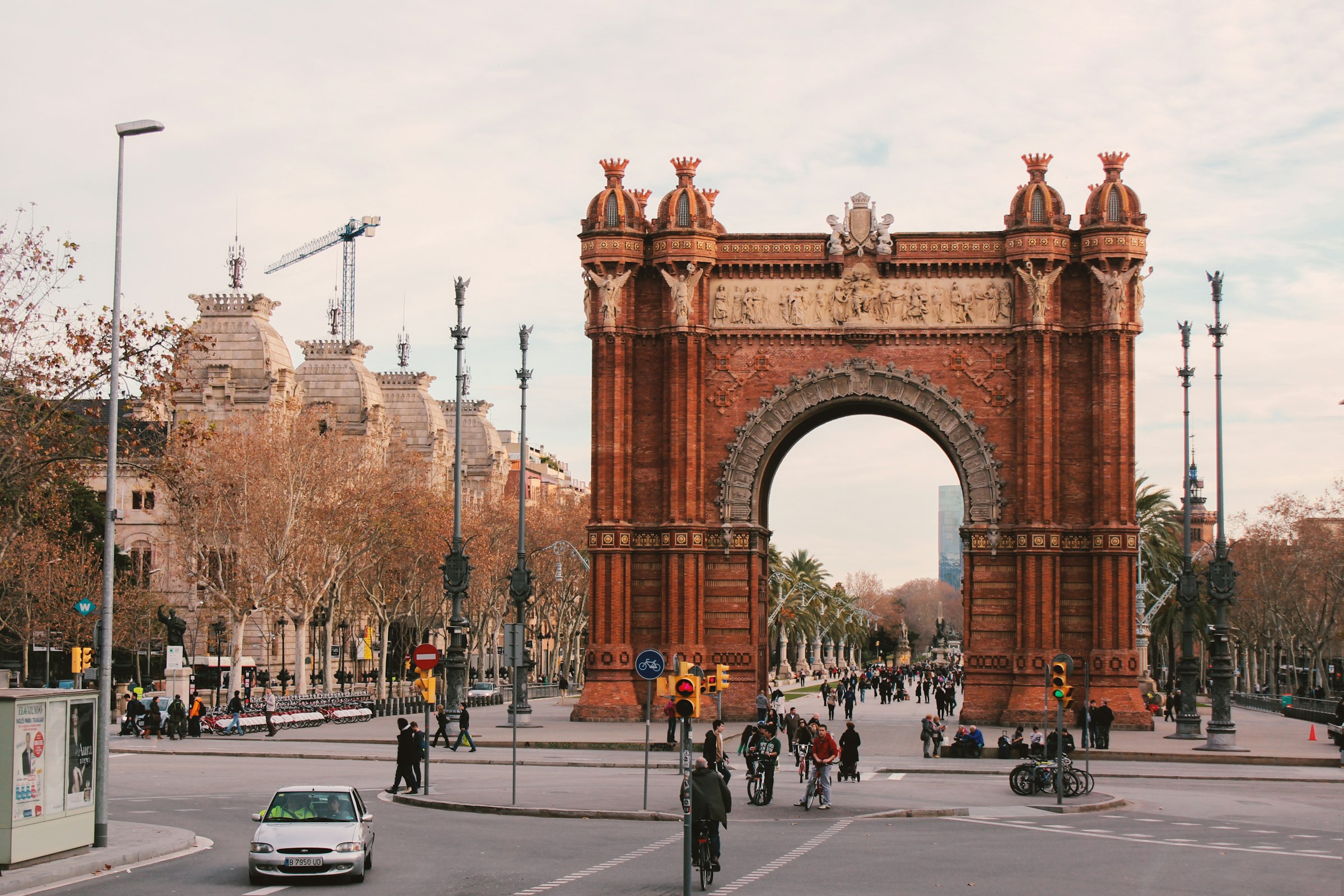
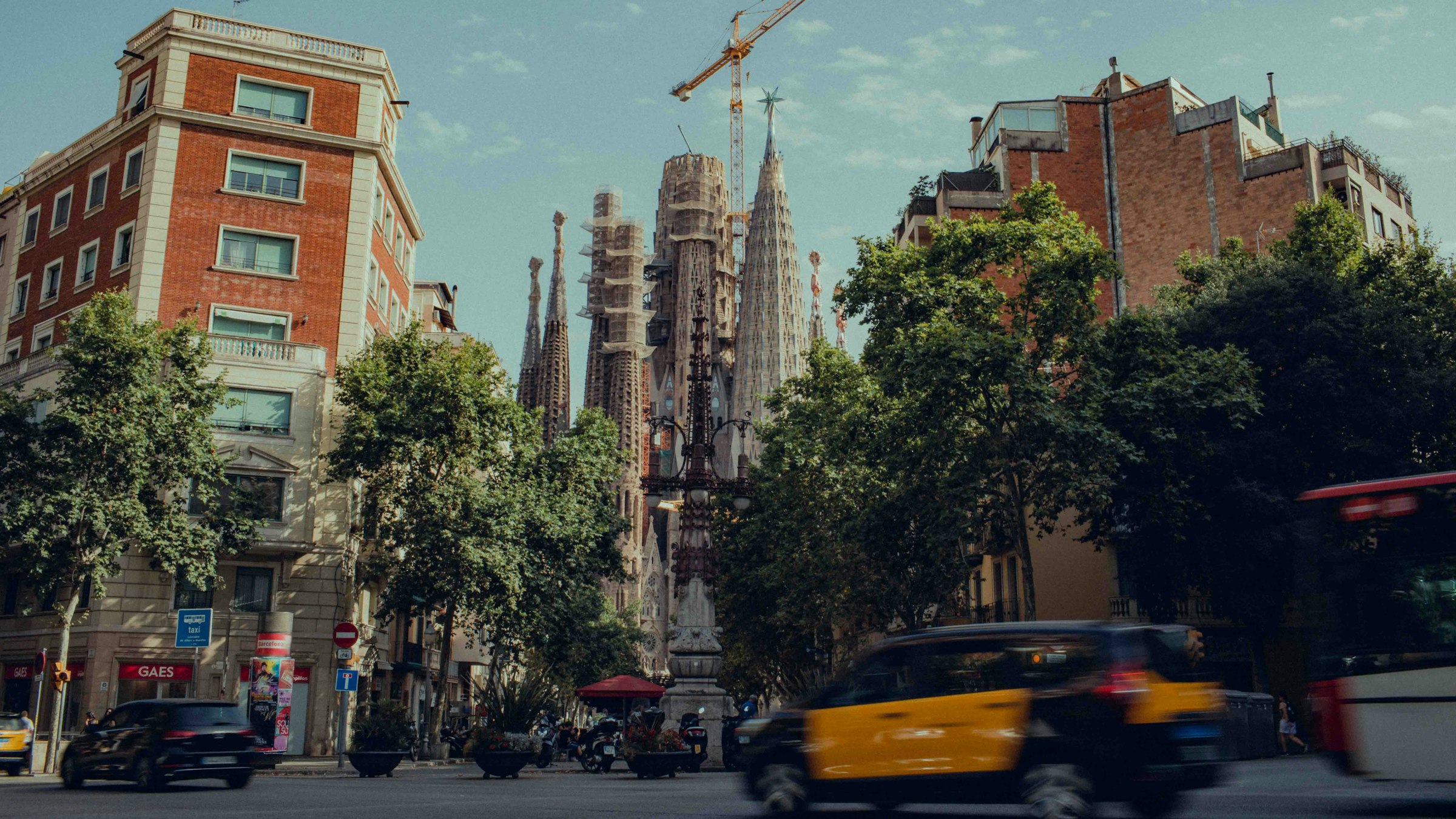
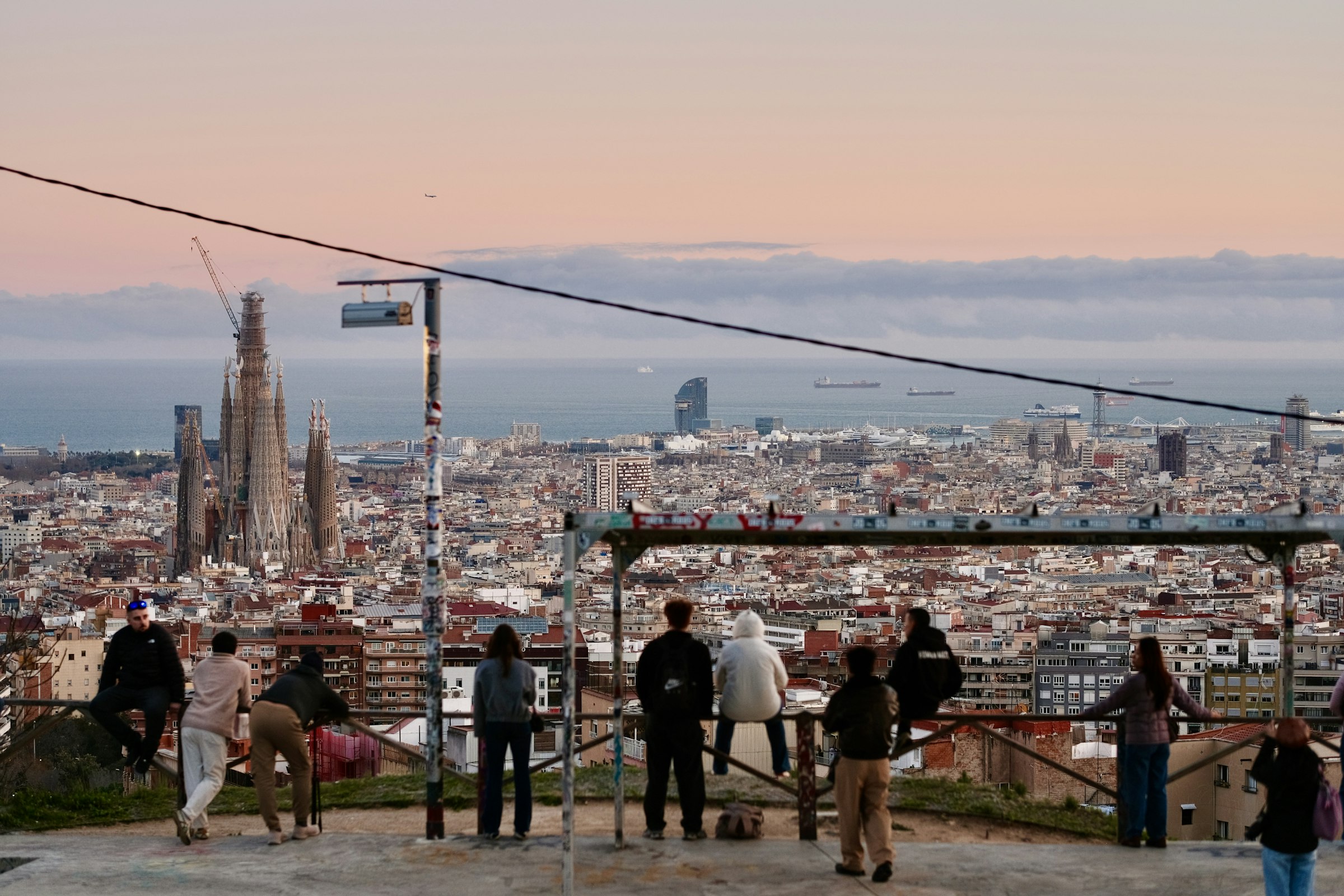
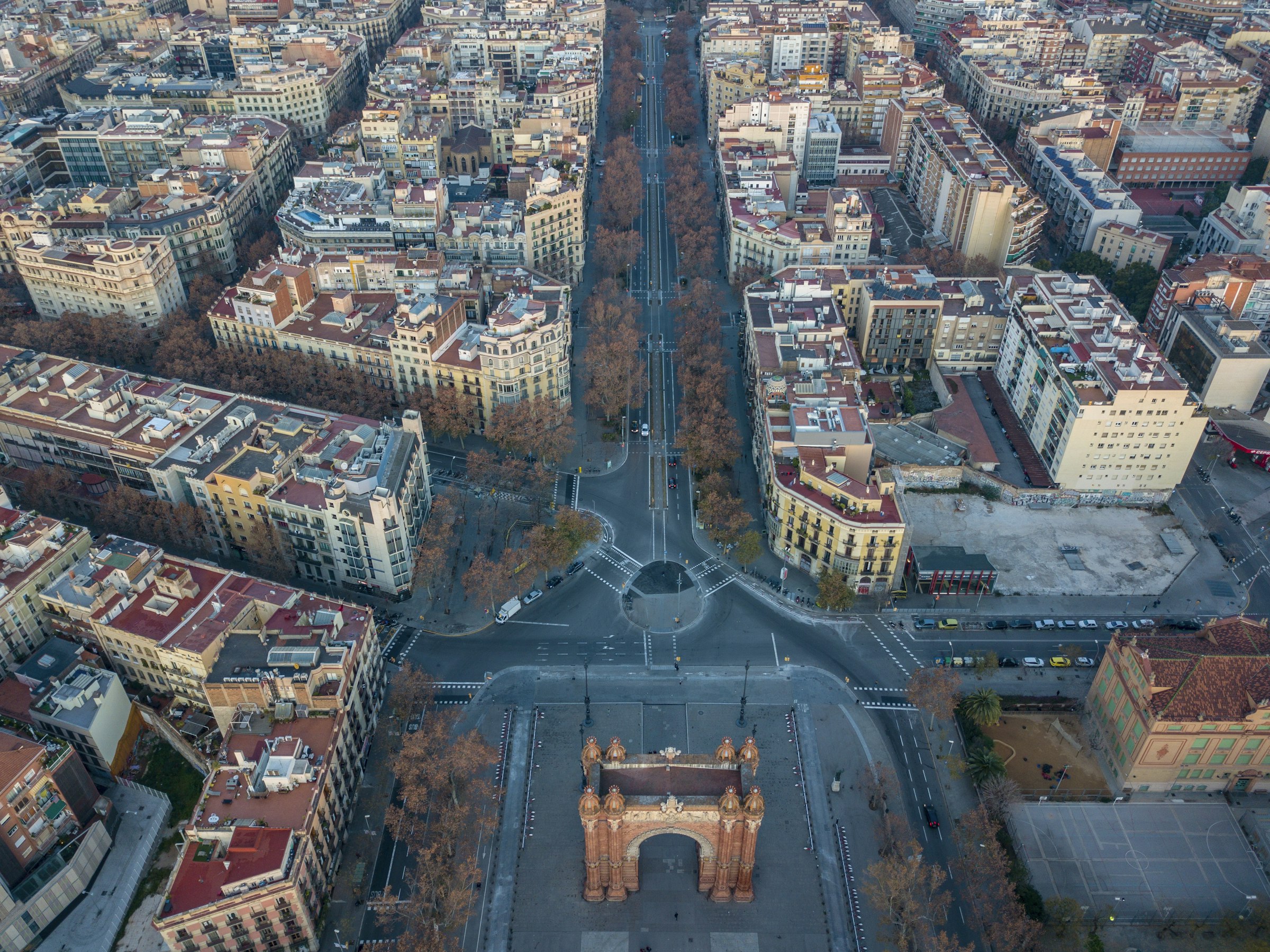
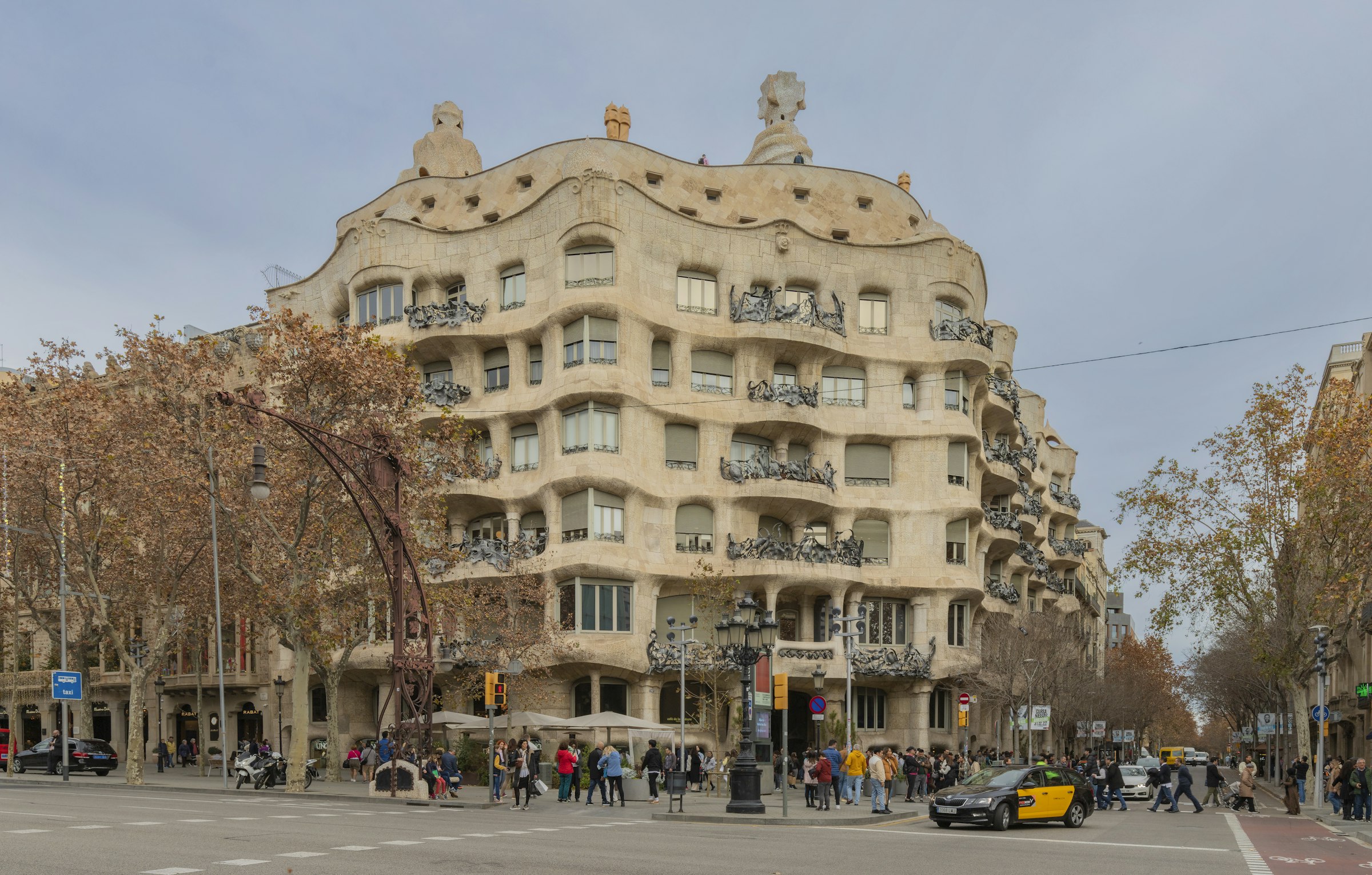
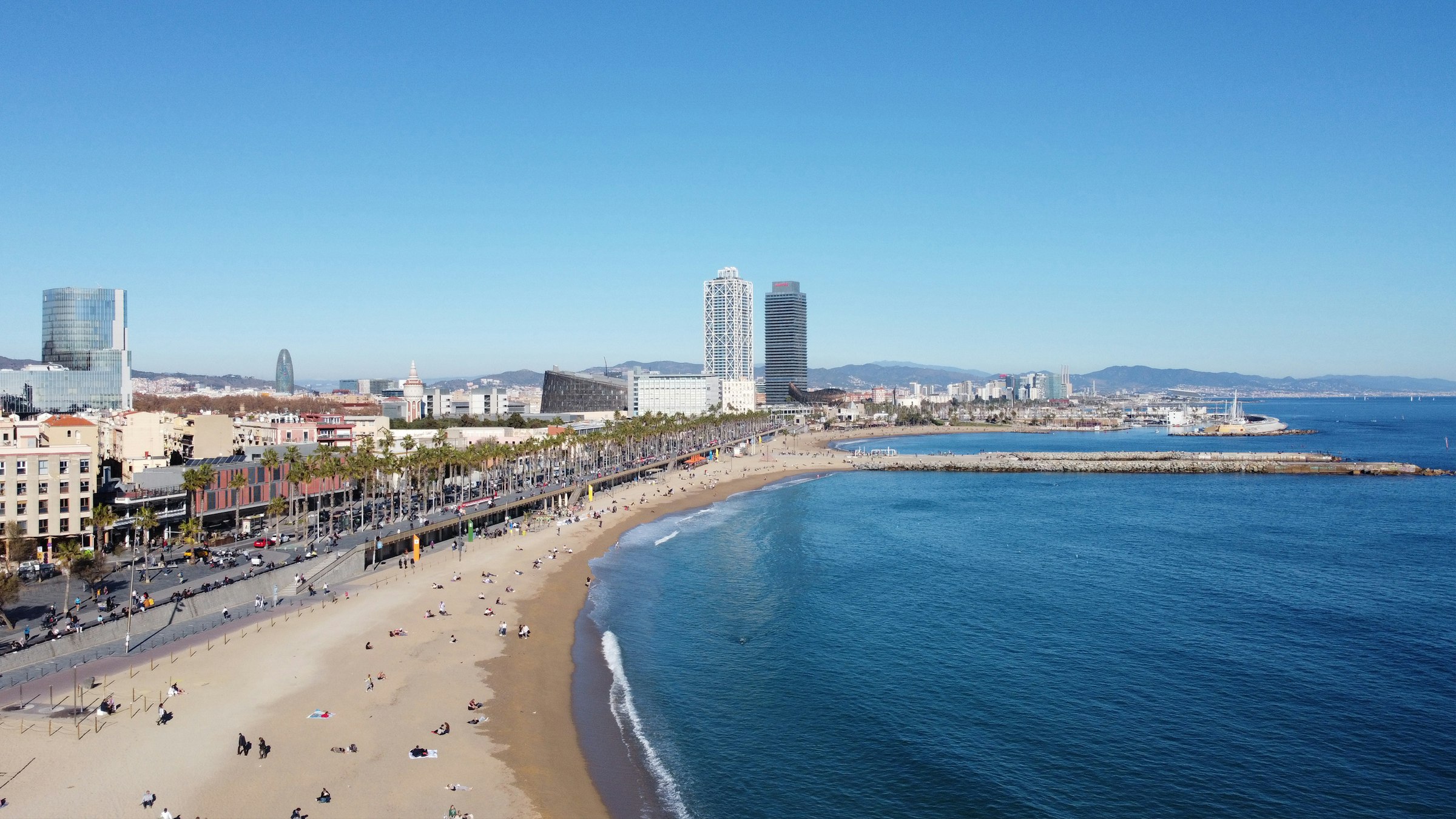
Through the Eixample past three Gaudí buildings, down to the harbour and along the sea, and back up to the Arc de Triomf.
Marathon Course · every marathon course, measured the same way
Barcelona Marathon
Through the Eixample past three Gaudí buildings, down to the harbour and along the sea, and back up to the Arc de Triomf. Passeig de Gràcia → Arc de Triomf, Barcelona, Spain.
Elevation · a third-party GPX of the 2025 race, on the course used since 2024 · Sonny 1" .hgt tiles — CC BY 4.0 · smoothed 100 m 3–35 m
—
0.08.416.925.333.742.2
kmmi — elev — grade — hover or drag the profile
Barcelona slopes down to the sea, and the course is laid across the slope: the first half up in the Eixample, the second along the water. The start is at 22 m. The steepest climbing kilometre comes early, 10 m from 1.6 km towards the Sagrada Família. The high point is on Passeig de Gràcia beside La Pedrera, 35 m at 15.1 km.
The steepest kilometre of the race is the drop straight after it, 11 m from 16.6 km, and from there it's mostly downhill to the harbour. From 23.5 km to 39.5 km, along the waterfront and out to the Fòrum, the course stays between 3 m and 9 m.
The last stretch climbs back up from the sea: 10 m between 39.5 km and 41.5 km. The finish, at 10 m, is 12 m below the start. Add up the energy cost of every gradient and the course comes out about level with a flat 42.195 km.
Take it with you
Course GPX Organiser's course map
The GPX is ours: our resampled line, a point every 25 m, carrying Sonny 1" .hgt tiles — CC BY 4.0 elevation rather than the GPS noise a watch file usually holds.
Sonny 1" .hgt tiles — CC BY 4.0, a third-party GPX of the 2025 race, on the course used since 2024, smoothed 100 m · marathoncourse.com/marathons/barcelona/ · checked 2026-09-24
19801990200020102020
Pace is derived from the certified distance. Terrain-adjusted figures come from the same model that ranks every course on this site.
Men’s course record
2:04:13
Tesfaye Deriba · 2025
Women’s course record
2:10:51
Fotyen Tesfay · 2026
The morning, hour by hour
The organiser's 2027 regulations. Spain's clocks don't change until the end of March. The organiser publishes no intermediate cut-off times. The limit is six hours from the last runner's start, and the finish closes at about 4:15pm.
Race-day mean temperature, 1995-2025. Lime marks the hottest edition; the coldest and wettest carry a label only, so the colour still means one thing.
Not quite. It climbs 117 m in all, most of it in the first half, up in the Eixample, where the high point is 35 m beside La Pedrera. From 23.5 km to 39.5 km, along the sea, it's flat. The last two kilometres climb 10 m back up to the finish.
Sonny's LiDAR DTM of Europe, sampled every 25 m, smoothed over 100 m. Raw-to-smoothed ratio 1.6.
Since 2024 the race has started on Passeig de Gràcia and finished at the Arc de Triomf, about a kilometre apart, after building work at Plaça d'Espanya moved it off its old loop below Montjuïc. Leave your bag at the finish.
The organiser's course page.
Yes, at about 13.9 km. It also passes Casa Batlló and La Pedrera on Passeig de Gràcia, and the Columbus monument at the harbour. It doesn't go near Camp Nou or up Montjuïc.
This site's course line.
For 2027, between €70 and €100, depending on how early you enter: the first thousand places are the cheapest, and everything after number 16,000 costs €100. Entries close at 37,000 or on 7 March 2027.
The organiser's 2027 regulations.
Since the move, yes. Tesfaye Deriba ran 2:04:13 in 2025, and in 2026 Fotyen Tesfay ran 2:10:51, the second-fastest women's marathon ever. Abel Chelangat won the 2026 men's race in 2:04:57.
World Athletics' report of the 2026 race.
Yes, to another runner through the registration platform, until 16 February, for a €15 fee. A place bought at a discount can't be transferred.
The organiser's 2027 regulations.
Yes. The course loses 0.3 m per kilometre and its start and finish are 1.0 km apart, both well inside the World Athletics limits.
Drop and separation from this site's Barcelona line, set against World Athletics Competition Rule 31.21.
The 2026 race sold out at 32,000, three months before race day, with about two-thirds of the field from outside Spain. For 2027 the cap is 37,000.
Organiser figures for the 2026 edition.
About 12.4 °C during a typical race: that's the median across 29 years, which have run from 7.5 °C to 15.5 °C. 0 of the 29 were wet.
ERA5 reanalysis for the race date, 1995-2025.
Yes. The course loses only 12 m from start to finish, far short of the 1,500 ft at which the B.A.A.'s downhill adjustment begins. The first half is the harder one, up in the Eixample, and the flat waterfront comes when you need it. Keep something for the climb back up to the Arc de Triomf in the last two kilometres.
Net drop −12 m from this site's course line; 2027 adjustment None. Certification elite label: World Athletics Elite Label in 2026; record-eligible.
It comes from Sonny 1" .hgt tiles — CC BY 4.0, sampled every 25 m along the course line and smoothed over 100 m. The raw-to-smoothed ratio here is 1.6. Around 1.3 means the model is reading the ground, not rooftops; above about 2.0 the total climb carries real noise, and the net change is the sturdier number.
0 missing samples · 0 bridge spans corrected.
| Fact | Source | Verified |
|---|---|---|
| Course line | Third-party GPX for the 2025 edition. The course has started on Passeig de Gràcia and finished at the Arc de Triomf since 2024, and the organiser's 2027 course page describes it unchanged. The file measures 42.329 km, 0.32 % long, from 793 points; our resampled line measures 42.161 km. Archived with its hash in data/raw/sources. | 2026-09-24 |
| Elevation | Sonny's LiDAR DTM of Europe (CC BY 4.0), sampled every 25 m, smoothed over 100 m. Raw-to-smoothed gain ratio 1.6. The course crosses no bridges. | 2026-09-24 |
| Elevation, independent check | The organiser's figures, as reported when the new course opened, put it between 8 m and 50 m above sea level. We measure 3.0 m to 35.0 m. The figures may describe a different datum or an earlier draft of the course; the difference isn't resolved. | 2026-09-24 |
| Race-day weather | ERA5 reanalysis via the Open-Meteo archive, 1995–2025 at the start, 08:00–14:00 local, sampled on the Sunday nearest 15 March. That reproduces the 2025, 2026 and 2027 dates, but not every earlier one. 2020 and 2021, when there was no March race, are excluded. | 2026-09-24 |
| Course records | Tesfaye Deriba 2:04:13 (2025) and Fotyen Tesfay 2:10:51 (2026), from World Athletics' report of the 2026 race. | 2026-09-24 |
| Entry and field | The organiser's 2027 regulations: 37,000 places, €70–100 by race number, entries closing 7 March 2027. The 2026 race sold out at 32,000. | 2026-09-24 |
| Race day | The organiser's 2027 regulations: start 8:30am, six hours from the last runner's start, finish closing about 4:15pm, drinks every 2.5 km from km 5 to km 40. | 2026-09-24 |
| Record eligibility | World Athletics Competition Rules, Book C, Part III — Competition Rule 31.21: a record course may lose no more than 1 m per kilometre, and its start and finish may be no more than 21.098 km apart. Barcelona loses 12 m overall, 0.3 m per kilometre, and its start and finish are 1.0 km apart. Inside both. | 2026-09-24 |
Until the Barcelona Marathon · 14 Mar 2027
— days
— hrs— min— sec
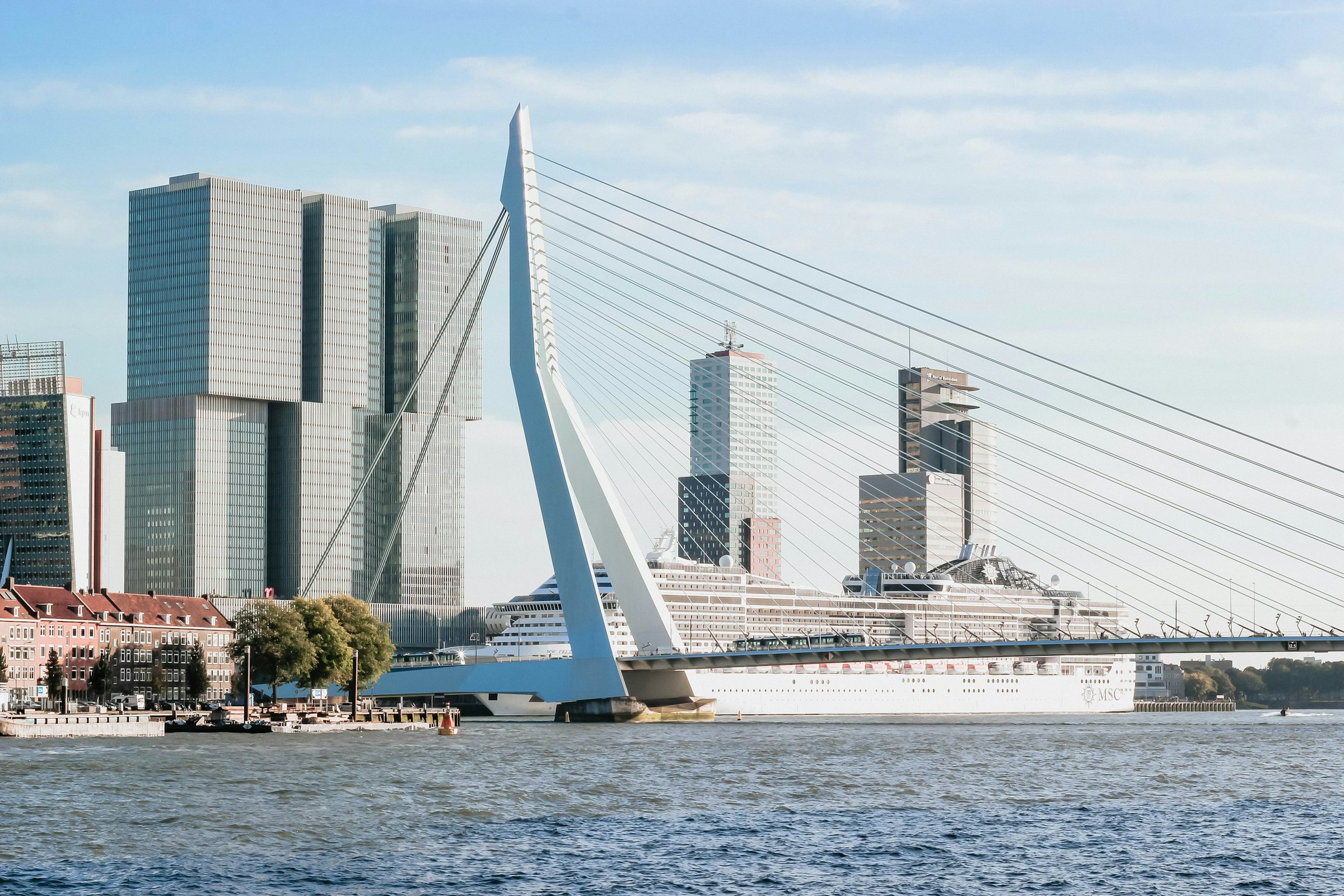
Rotterdam, Netherlands · 11 Apr 2027
Over the Erasmus Bridge to the south bank and back, out round the Kralingse Plas, and home up the Coolsingel.
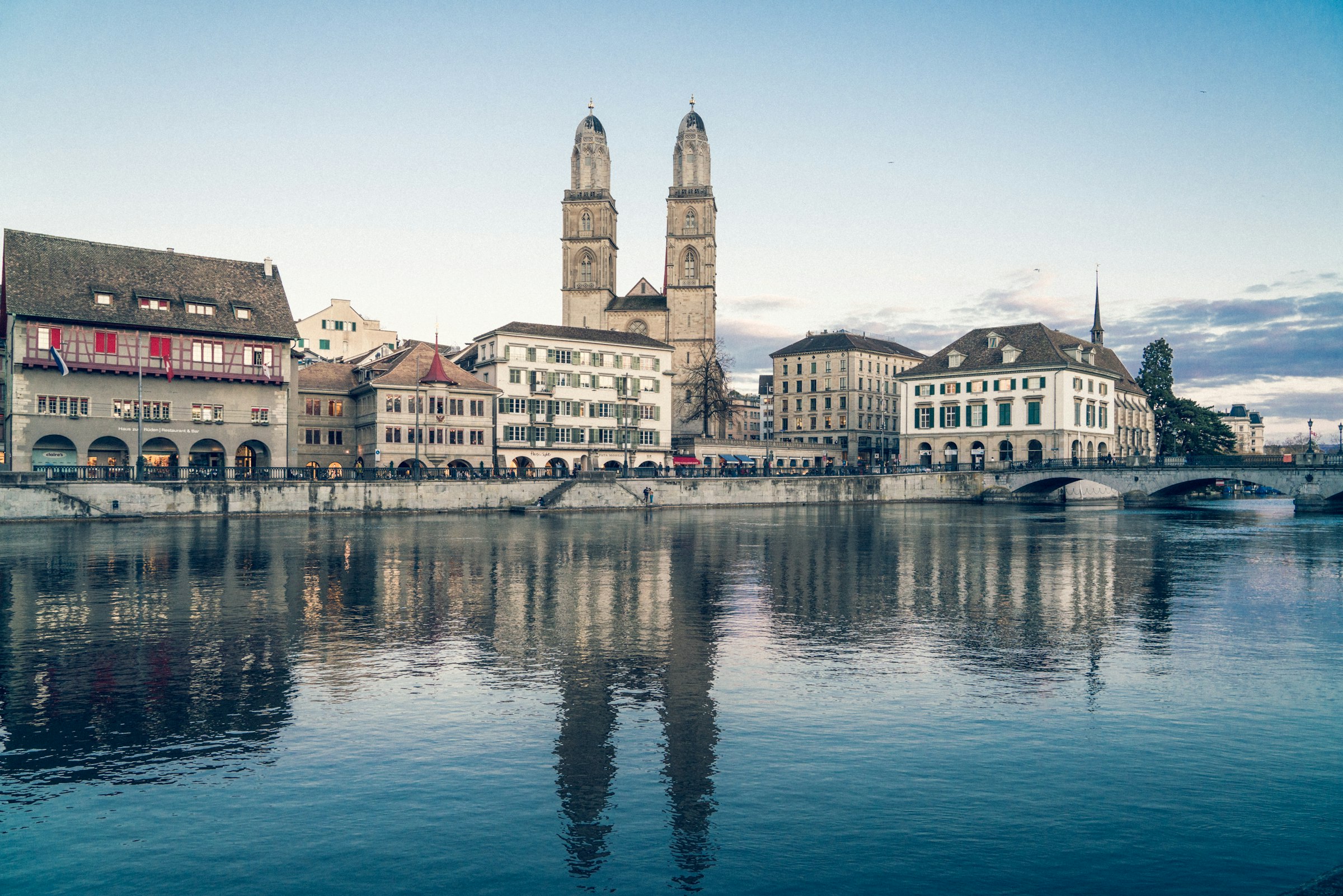
Zurich, Switzerland · 11 Apr 2027
From the Quaibrücke down the lake's eastern shore to Meilen and back, with a loop through the city at each end.
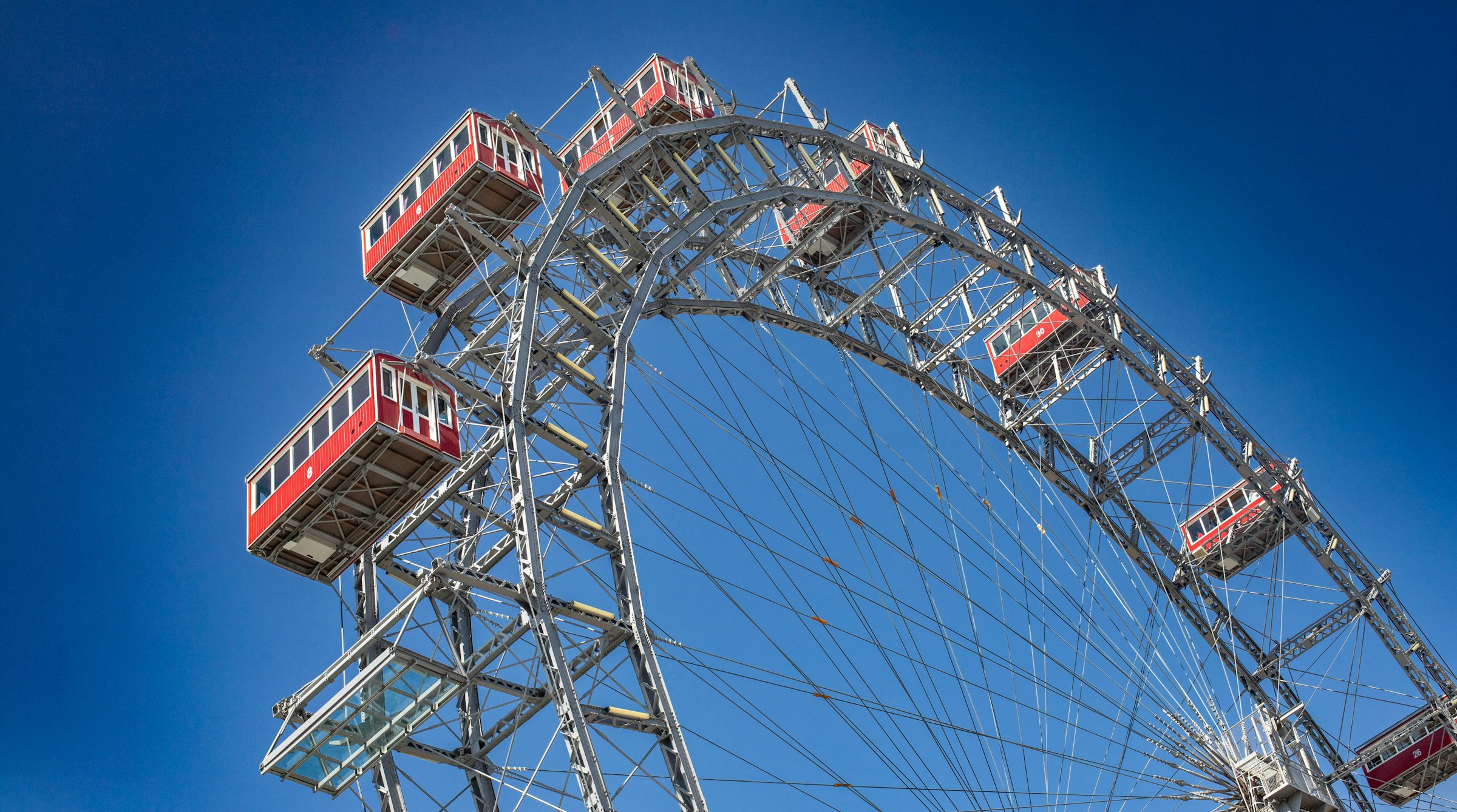
Vienna, Austria · 18 Apr 2027
Over the Danube to the Prater, out along the Wienzeile to Schönbrunn, and home on the Ring to the Burgtheater.